Meet your Instructor

Abby Markham, Certified ISR Instructor

About Abby

Hello! I'm Abby Markham, originally from D.C. I began my career working on Capitol Hill and spent several years in writing, political messaging, and communications. As a proud USMC spouse, I've had the privilege of traveling the world with my husband and 4 kids. We've moved nine times and are thrilled to finally put down roots here in Prince William County. 

My journey with Infant Swimming Resource began when my oldest was a toddler. Like many parents, I was looking for ways to keep him safe. I knew drowning was a huge risk--in fact it's the number one cause of accidental death in children ages 1 to 4--I wanted to find some way to combat this danger. And that's how I stumbled upon ISR. 

Watching my son learn life-saving water safety skills was transformative. We became an ISR family and never looked back! Since then, all three of my other children have gone through ISR lessons, and I've seen firsthand the incredible impact this program can have. They gained swimming skills, the ability to self-rescue, and tremendous confidence in and out of the water--gifts I'm thankful for every day. The ISR Instructors we met along the way inspired me to bring that same peace of mind to other families. And my passion was born. 

Becoming an ISR Instructor has been one of the best decisions I've ever made. Watching children grow in confidence and learn these vital skills that will last a lifetime is truly rewarding. There's nothing like that first 'I did it!' smile! Parenting is full of challenges, and I know how important it is to equip our kids with the tools they need to thrive. That's why I'm passionate about helping families feel confident and empowered when it comes to water safety. I'm excited to continue working with families here in Prince William County and to share this incredible gift with many more children. I can't wait to meet you and your little ones!
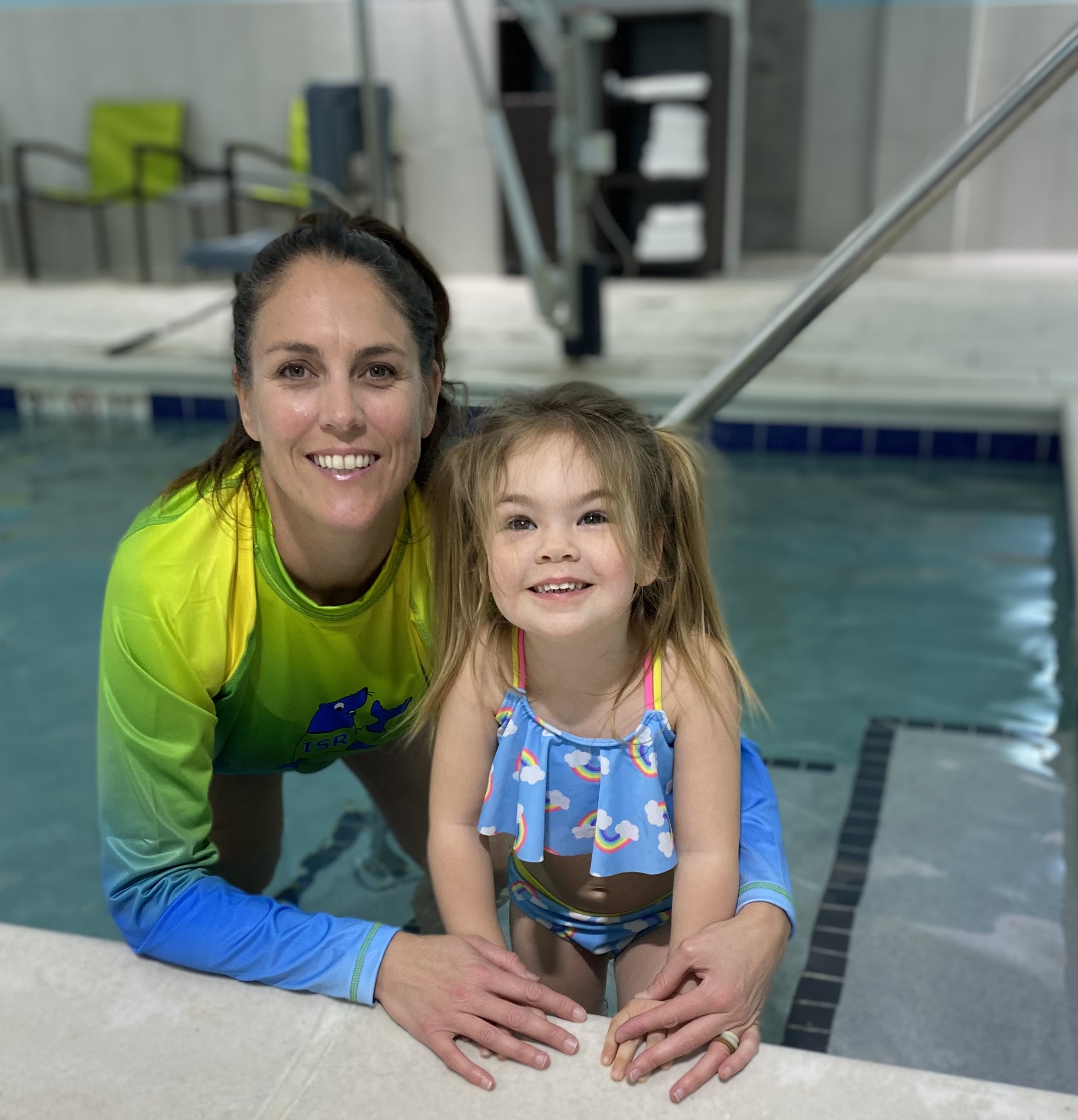
Swim Instructor Image
FAQs
Why do you have the children swim in clothes?
Because 86% of children who fall in the water do so fully clothed, we want our students to have experience with such a situation. If a child has experienced the sensations of being in the water in clothing prior to an emergency situation, he/she is less likely to experience panic and be able to focus on the task at hand. If you have ever jumped in the water with clothes on, then you know that there is a significant difference in weight and feel with clothes as opposed to a bathing suit.
Why are lessons 5 days per week and for only 10 minutes?
The reason for this is multifaceted. First, repetition and consistency are crucial elements of learning for young children. Research shows that short, more frequent lessons result in higher retention. Second, most children have fairly short attention spans and will not be able to focus on the task for longer and we want to take advantage of the best time for learning. A third reason is that, though the pool temperature is maintained at 78-88 degrees, the temperature is still lower than your child's body temperature. Lessons are work and therefore will also be losing body heat. Instructors check students regularly for temperature fatigue since this is an indicator of physical fatigue.
What is the American Academy of Pediatrics position on swimming lessons for young children?
The AAP encourages parents to consider that starting water-survival skills training at an early age must be individualized, based on the child's frequency of exposure to water, emotional maturity, physical limitations and health concerns related to swimming pools. You can view their policies and suggestions through the AAP website here: https://www.healthychildren.org/English/safety-prevention/at- play/Pages/Swim-Lessons.aspx
How can you teach babies and young children to swim?
ISR instructors teach infants to swim by honoring each child's individual strengths and experiences. They understand the fundamentals of the behavioral sciences, child development and of sensori-motor learning as it relates to the acquisition of aquatic survival skills; they use this education to guide each child through the sequence of learning to swim and float.

Ready to Get Started?

Check out our programs and get started today!